

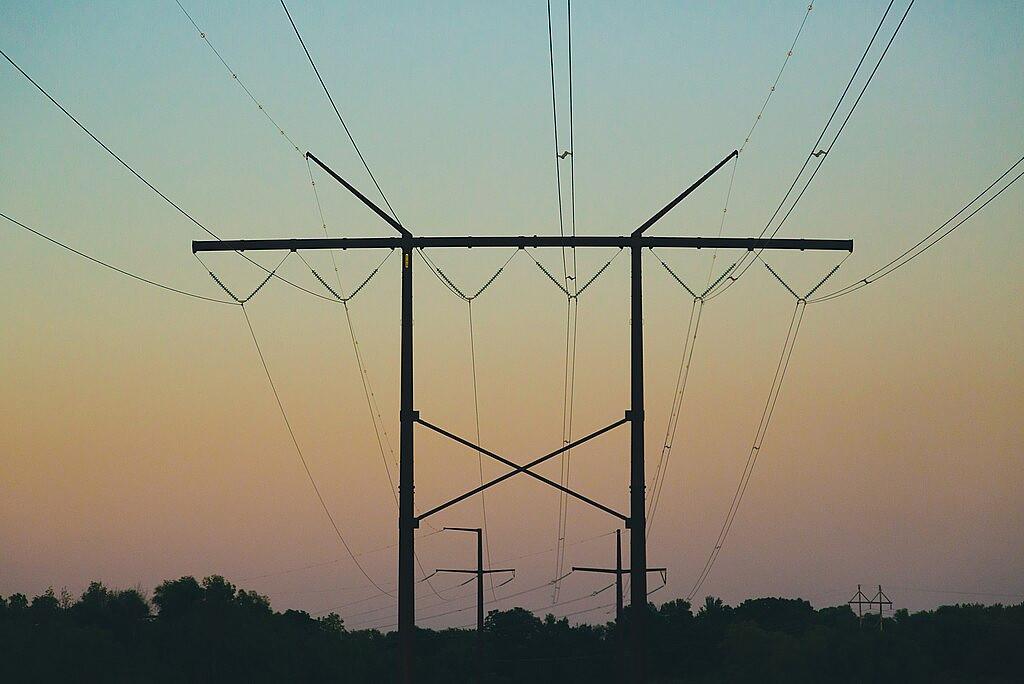


A coalition of electrical utilities, including two major players in Wisconsin’s power supply, is seeking federal intervention to pause competitive bidding for transmission projects needed to meet the vast energy needs of the data center boom.
The coalition filed a complaint with the Federal Energy Regulatory Commission (FERC) on Tuesday asking the agency to exempt at least some major grid upgrades from bidding, arguing “bureaucratic red tape” can tack months onto project timelines and strain the country’s ability to “achieve dominance” in artificial intelligence.
“This complaint is about whether our country will seize, or squander, a generational chance to own the next century,” the utilities wrote.
Among the companies behind the complaint are Xcel Energy, owner of Northern States Power Company-Wisconsin, and American Transmission Company (ATC), which owns and operates transmission lines across much of Wisconsin.
National and statewide ratepayer advocacy groups reacted with alarm, casting the utilities’ request as a recipe for higher electricity bills.
“Utilities rushing to catch a ride on the AI investment gold rush need to slow down and think about the impact their proposals are having,” wrote Wisconsin Citizens Utility Board Executive Director Tom Content, as customers “wake up like Groundhog Day to rate hikes well above the cost of living.”
The complaint and the pushback it prompted mark the latest phase in a long-standing fight over the benefits of opening the transmission market to competition.
Stiff competition
FERC first introduced competitive bidding for regional transmission projects in 2011 after ratepayer advocates lobbied for change, arguing that the earlier process — allowing local monopolies to control all projects within their territories — all but guaranteed inflated costs.
The shift set off a race between developers angling for a piece of the action. When a developer wins a transmission project, it also picks up a new revenue stream: Regulators pre-approve developers’ “return on equity,” or profit on each dollar invested.
Dozens of developers have lined up for a piece of the action since the Midcontinent Independent System Operator (MISO), a nonprofit that manages the wholesale electricity market and grid for much of the Midwest, approved more than $10 billion in new transmission projects in 2022. A new round of projects approved in December 2024 added about $22 billion to the total, and the list of prospective bidders grew once again.

Some are local utilities hoping to maintain control of their territory; others are powerful national utilities venturing outside of their turf, international developers wading into the U.S. market, and startup transmission developers backed by private equity firms.
While the data center rush had already begun in the Midwest by the time MISO approved the latest set of transmission projects in 2024, the approved projects often couldn’t account for the scale and breakneck pace of the data center developments that emerged in the region soon after. With the boom now in full swing, the tenor of competition for transmission projects is changing.
Debate over bidding benefits
MISO, which is also responsible for picking a developer for each project, has favored lower-cost bids with more substantial “cost containment” measures designed to shield customers from budget overruns. Ratepayer advocates say the lower bids are proof the bidding requirements are working, pushing even major national utilities to underbid competitors.
In their complaint to FERC, the coalition of utilities — which calls itself the “Grid Acceleration Coalition” — argued the benefits of competition are “unproven.”
Projects entirely within one utility’s territory aren’t subject to competitive bidding; those projects routinely exceed initial budgets by millions of dollars. While cheaper bids tend to win competitive projects, the utility group argued that even those projects aren’t immune to budget overruns.
But the core of the utilities’ case is about time, not money. They argue the bidding process adds months to project timelines without clear benefits.
In their view, those delays harm customers, in part by slowing the construction of transmission lines that could expand access to cheaper electricity and prevent blackouts, and pose national security risks.
“These projects — expressways for power — are as critical to meeting today’s challenges as the Eisenhower interstate highway system was to prevailing in the Cold War,” the coalition argued in its complaint. “China has devoted itself to overtaking America as the world’s AI leader and is just months behind.”
The utilities pointed to a recent example in Wisconsin: Last month, MISO reversed its decision to award three substations in Fond du Lac, Ozaukee and Sheboygan counties to private-equity-backed startup Viridon, instead handing the projects to ATC.
ATC’s initial bid was more expensive than Viridon’s, but the company successfully argued it alone could build the substations in time to serve the nearby Vantage data center campus in Port Washington.
MISO’s initial plans set a goal to complete the substations by 2033; the Port Washington data center plans to come online in early 2028. Though ATC emerged victorious, it told FERC that the 15-month delay between MISO’s initial approval of the substations and the reversal was “completely unnecessary.”
Ratepayer advocates and other observers, however, quickly pointed out that even noncompetitive projects run into delays. ATC’s Cardinal-Hickory Creek transmission line in southwest Wisconsin, for instance, came online in 2024 — more than a decade after MISO approved it — following prolonged legal battles with conservation groups.
“All developers can experience construction delays,” said Claire Wayner, a senior associate with the clean energy nonprofit Rocky Mountain Institute. “It’s not like there’s a silver bullet.”
Opponents also underscored that two competitively bid projects in the Southwest met their in-service date goals last year.
“Competitive transmission projects have been shown to have a better track record of adhering to cost containment and completion schedules than noncompetitive projects,” said Paul Cicio, chair of the national Electricity Transmission Competition Coalition. “A moratorium would move us backward at precisely the wrong time.”
The back-and-forth over the merits of competition is nothing new, Wayner noted. “The tricky thing with transmission competition is that there are stories of projects from both sides of the aisle that support their positions.”
The push to pause competition
The utility group proposed two options to FERC: Allow MISO and a Southwestern regional grid operator to exempt projects from competitive bidding on a case-by-case basis or suspend competition entirely for the next five years — “a period pegged to when our country must begin building the infrastructure that will decide which nation wins the AI race.”
The utilities added that they don’t intend to “claw back” other projects already awarded or interrupt ongoing bidding processes.
During that five-year period, national forecasts estimate data center electricity demand could reach up to 25% of the country’s total energy use. MISO alone projects that it may need to double its current pace of generation growth to avoid shortfalls in the near future.
MISO’s territory, stretching from the Upper Midwest to Louisiana, has seen by far the most dramatic increase in data center capacity since 2020 relative to other regional grid networks.
The right of first refusal fight
After FERC introduced competitive bidding in 2011, utility groups turned to state legislatures. The result: right-of-first-refusal (ROFR) laws that give established local utilities first dibs on transmission projects in their territories, including those planned by regional grid operators like MISO.
Utilities prevailed in Minnesota and Michigan; Iowa’s Supreme Court struck down its ROFR law in 2023 after a national transmission developer challenged its constitutionality, and Illinois Gov. J.B. Pritzker vetoed an ROFR bill the same year.
But similar efforts have failed in Wisconsin. State lawmakers have consistently rejected ROFR proposals, including a 2025 bill sponsored by Assembly Speaker Robin Vos, R-Rochester.

Wisconsin ratepayer advocates see the FERC complaint as a work-around. “It is another effort by the utilities to defeat competition,” Todd Stuart, executive director of the Wisconsin Industrial Energy Group, wrote in an email to Wisconsin Watch. “When they lose in state legislatures and then lose out on competitive bids,” he added, “they go back to FERC.”
In the utilities’ complaint, Xcel Energy cited Wisconsin’s lack of an ROFR law, and the resulting bidding process for projects in the state, as posing a risk of delaying upgrades needed to serve a data center across the border in Minnesota.
The company wouldn’t comment about the parallels between the options utilities suggested in the FERC complaint and ROFR laws. Instead, spokesman Kevin Coss pointed to permitting reforms in Minnesota — a 2024 law streamlining permitting for clean energy projects — as another example of the company’s efforts to “speed the buildout of critical infrastructure across our systems.” Xcel did not bid on any of the competitive projects in Wisconsin.
In a statement to Wisconsin Watch, ATC argued the options its coalition suggested to FERC “would not operate as a substitute” for an ROFR law, “even temporarily or on a case-by-case basis.”
Buildout costs fall to ratepayers
Regardless of who builds a transmission line, ratepayers cover the construction and maintenance costs through their electricity bills. We Energies estimates that transmission-related costs account for about 10% of customers’ bills.
Customers across the Upper Midwest share the costs of MISO-designed projects across multiple states, spreading costs among a larger number of ratepayers.
But billing practices vary. In some cases, utilities can only bill ratepayers for the costs of building a transmission project after it comes online. When ATC builds a transmission line, FERC allows the developer to begin billing customers while the line is still under construction.
ATC says this approach saves customers money in the long term by reducing interest on construction costs.
Ratepayer advocates see it differently. “Consumers are paying for projects without receiving the benefits,” Cicio said. Transmission projects take years to complete, and short-term increases in monthly electricity bills don’t square well with concerns about affordability and the risk of stranded assets if the AI boom goes bust.
Adding to the frustration: a planned 9.2% electricity rate increase for We Energies customers in eastern Wisconsin over the next two years. That rate hike in part reflects the addition of generators, including new natural gas plants in Milwaukee and Kenosha counties, needed to meet data center demands.
Wisconsin’s Public Service Commission will soon decide how to divvy up costs of powering We Energies-served data centers — a decision that could set a statewide precedent.